

Is It Legal to Sleep in Your Car in Quebec?
What the law allows and situations that may raise issues (notably when alcohol is involved)
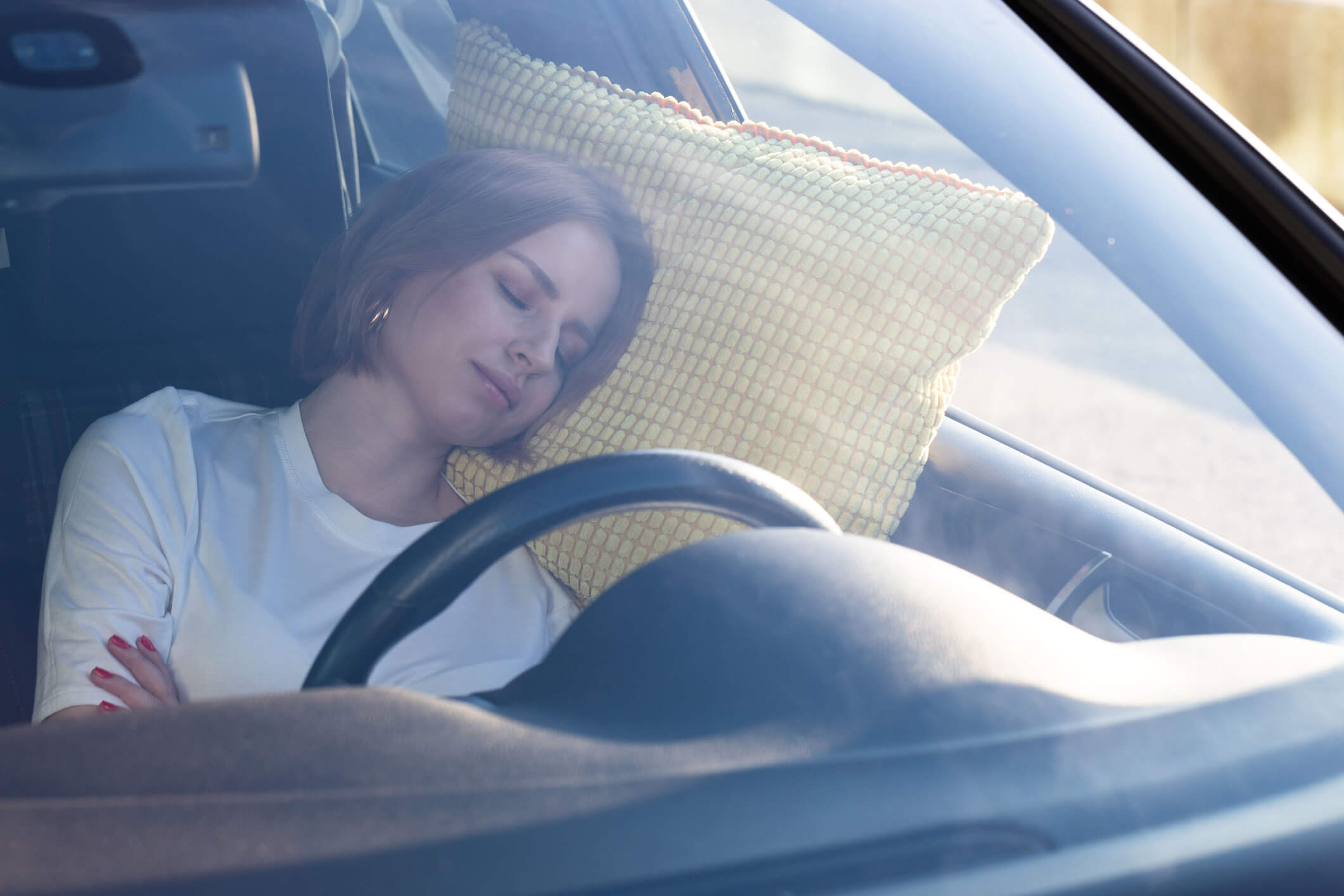
Sleeping in your car may seem harmless, or even responsible, in certain situations. However, the question “Is it legal to sleep in your car in Quebec?” raises several important legal issues, particularly when alcohol is involved.
This article has a strictly informative and neutral purpose: to explain the legal framework applicable in Quebec and Canada, without interpretation or encouragement to adopt any particular behavior.
Sleeping in Your Car: Is It Illegal in Itself?
Generally speaking, sleeping in your car is not illegal in Quebec. Simply being parked and sleeping inside a vehicle does not, in itself, constitute a criminal or penal offence.
That said, certain restrictions may apply depending on the context, including:
- municipal bylaws prohibiting overnight parking;
- rules specific to private parking lots;
- local prohibitions related to camping or prolonged occupation of a vehicle.
These restrictions usually fall under municipal or civil law, not criminal law.
The Key Issue: Sleeping in Your Car After Consuming Alcohol
The situation changes significantly when the person is under the influence of alcohol.
In Canada, alcohol-related offences are not limited to driving. The law also prohibits having the care or control of a motor vehicle while one’s abilities are impaired.
As a result, a person may be charged even if:
- the vehicle is stationary;
- the person is asleep;
- the engine is turned off;
- the vehicle has not been moved.
The absence of an intention to drive does not automatically rule out an offence.
What Does “Care or Control” Mean?
Care or control refers to a situation in which a person is in a position that could potentially allow them to set a vehicle in motion.
To assess this notion, several factors are considered, including:
- where the person is located inside the vehicle;
- whether the keys are accessible;
- the operational condition of the vehicle;
- the person’s actual ability to put the vehicle in motion;
- the overall context observed by authorities.
This is a case-by-case analysis, based on all surrounding circumstances.
Sleeping in the Back Seat: Is It Automatically Allowed?
No.
Contrary to a common belief, sleeping in the back seat does not guarantee that no offence has been committed.
Even in this situation, charges may be considered if:
- the keys are accessible;
- the person is alone in the vehicle;
- the vehicle is capable of operating;
- the context suggests that it could be moved.
Position within the vehicle is one factor among others, but it is never decisive on its own.
Are There Situations Where an Offence Is Less Likely?
Certain circumstances may make it more difficult to establish care or control, for example:
- the keys are clearly out of reach or kept separate from the vehicle;
- the person is not in a position to exercise control over the vehicle;
- the vehicle is clearly inoperable.
However, this does not constitute a guarantee, since every situation is assessed according to its specific circumstances.
Possible Implications for Car Insurance
Even when a vehicle is stationary, certain situations may have implications for auto insurance, depending on the context and the policy held.
For example:
- An incident occurring while the vehicle is occupied (theft, vandalism, fire) may be treated differently depending on the coverage in place.
- A criminal charge related to alcohol may affect a driver’s insurability profile, regardless of whether actual driving occurred.
- Certain conditions may apply when alcohol is involved, even if the vehicle was not in motion.
These elements vary from one insurer to another and depend on the specific contract. They illustrate that vehicle-related issues are not purely legal, but can also be insurance-related, even when the vehicle is immobilized.
What the Law Does Not Explicitly Say
There is no absolute rule stating that sleeping in your car while intoxicated is always legal or always illegal.
Decisions are based on:
- the authorities’ assessment of the situation;
- the notion of care or control;
- subsequent analysis if the matter is brought before the courts.
In Summary
✔️ Sleeping in your car while sober
→ Not illegal in itself, subject to municipal or private regulations.
⚠️ Sleeping in your car while intoxicated
→ Charges are possible if authorities determine that the person had care or control of the vehicle, even without actual driving.
✔️ Each situation is assessed on its own facts
→ No scenario is automatically legal or illegal.
Key Takeaway
Sleeping in your vehicle may sometimes seem like a prudent solution, but the Canadian legal framework is based on risk prevention, not solely on the act of driving. This approach can also have insurance implications, depending on the circumstances and the coverage in place.